Genkøb
Buying one piece back
Open stock is the point of this range: a broken plate should cost a plate, not a service. That is a real undertaking with real edges, and this page is about the edges — because a resupply promise nobody can keep is worse than no promise at all.
Last updated 13 August 2026 · Governing law: Denmark
What we do undertake
- Everything in the current range is sold as a single piece. The three pieces that break first — the Ø26 dinner plate, the Ø18 soup bowl and the 220 ml cup — are listed separately in open stock, and every other piece can be ordered on its own too.
- Forms stay put. We do not quietly redraw a plate between production runs. A Ø26 dinner plate bought two years from now will have the same diameter, the same stacking pitch and the same rim section as the one you have.
- We tell you before something stops. When a piece is going out of production its page is marked final batch before the stock runs down, not after, and it names the piece taking over.
- Sets are priced against open stock. Every set page shows the sum of its parts at single-piece prices, so you can always see what repairing it would cost.
Where it stops
We will not tell you a piece will be available indefinitely. A workshop that promises that is making a promise about a decade it cannot see: clay bodies get reformulated, glaze materials go out of supply, kilns get replaced and workshops change hands. What we can honestly say is that we restock what is in the current range and that we give notice before anything leaves it.
There is no charge, no membership and no subscription attached to any of this. Buying a replacement piece is an ordinary order, placed whenever you need one.
Glaze batches, and why colour moves
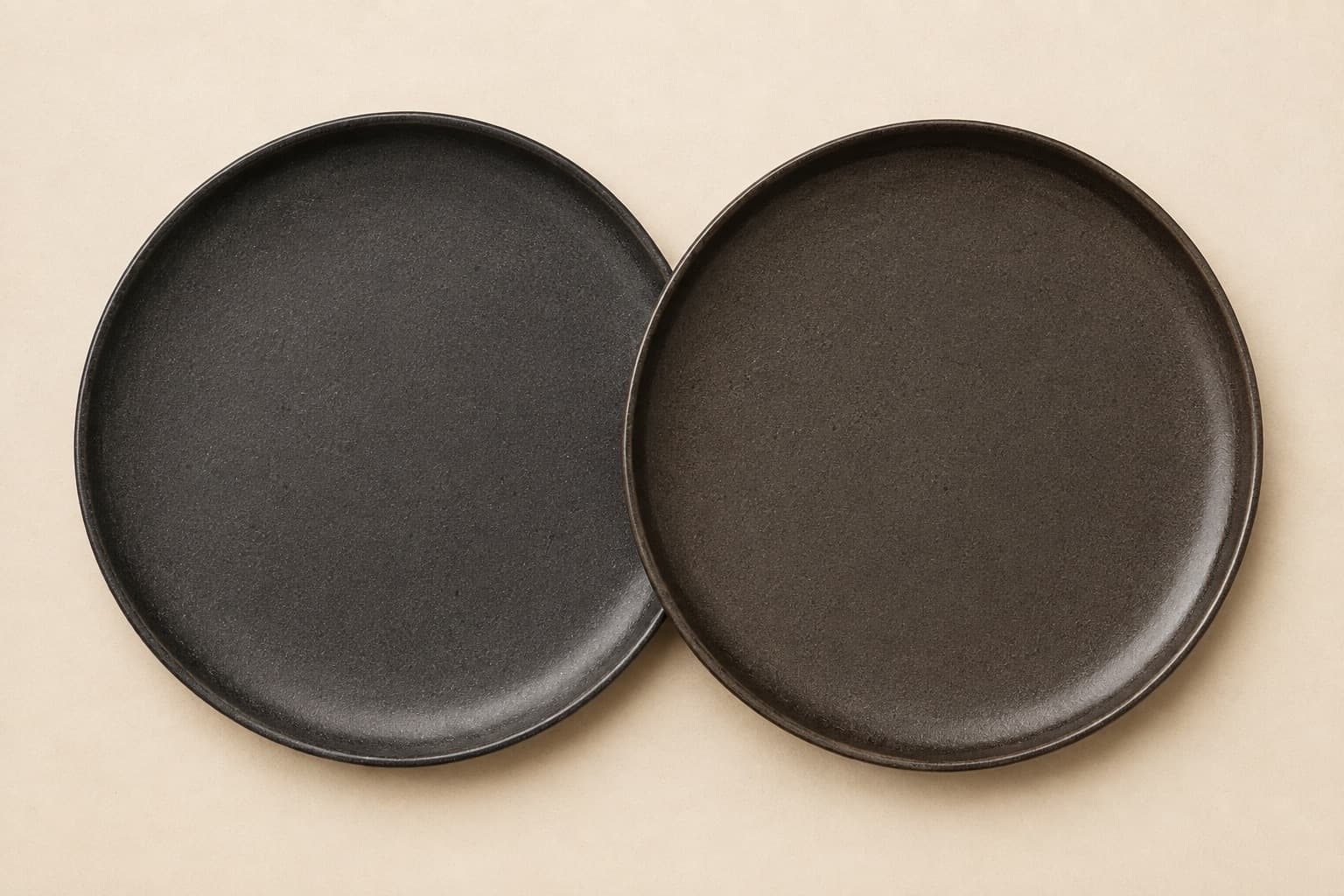
The charcoal glaze is mixed in batches and fired in loads. Raw materials vary between deliveries, kiln atmosphere varies between firings, and the result is that two batches of the same recipe sit a shade apart — usually a shift between a cooler graphite and a warmer brown-black. Side by side on a table, an attentive person will see it. In a stack, nobody will.
This is the single largest source of complaint in open-stock tableware, so we put it in front of the purchase rather than in the small print. The batch currently shipping is G1-2604, and it is printed on every open-stock and set page, in the basket when one of those is in it, and again at checkout.
If matching matters to you — you are laying a table where the pieces sit rim to rim — order the replacements together rather than one at a time, and tell us the batch number of what you already have. If we still have stock from that batch we will send it. If we do not, we will say so before you order rather than after.
A batch difference is not a fault and it is not covered by the right to complain. It is covered by the right of withdrawal like anything else: if a replacement piece arrives and the colour is not close enough for you, send it back within 14 days.
When a piece is in its final batch
- The product page is marked, and the card in the range listing is marked too.
- The page names the piece that takes over, with a link to it.
- The piece stays on sale until the batch is gone. It is not withdrawn early to force an upgrade.
- Once it is gone the page comes down and the range listing points at the replacement.
If you are building a service around a piece that has been marked, buy the spares you expect to need while the batch is still there. We will tell you roughly how much is left if you ask.
Asking about a specific piece
Email support@ancherstudio.shop with the piece and, if you have it, the glaze batch number from the original order. We will tell you what is in stock, what batch it is from and whether the form is staying in the range.